Reality TV Families Who Turned Fame Into Acting Careers
Some reality stars build lasting acting careers; most don't.
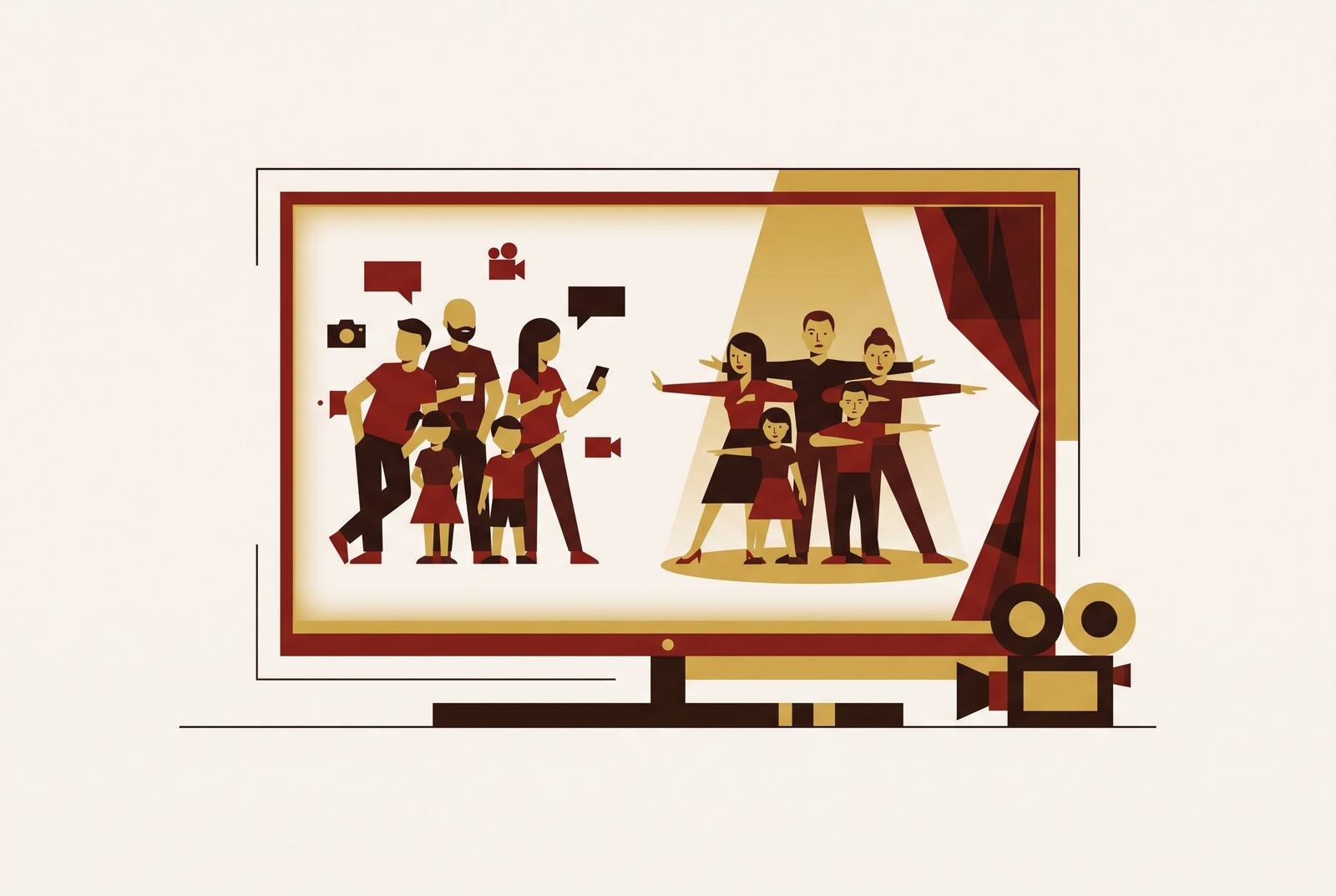
Reality television has quietly built a functioning pipeline into scripted acting, and 2026 is the year that pipeline became impossible to ignore. Vulture and AceShowbiz reporting describes reality TV as the dominant cultural form of the moment, with former prestige-TV loyalists like Jon Hamm and Lena Dunham now openly admitting they watch shows like Southern Charm and Vanderpump Rules. Vulture's decision to launch an inaugural Reality TV Masterminds list confirms as much: the industry now treats unscripted television as a place where careers get built. But visibility and credibility are not the same currency, and most people assume they are. The families and individuals who've tried to convert one into the other prove that the conversion only works under specific, narrow conditions, and most attempts at it fail.
How the Osbournes turned MTV notoriety into multi-directional careers and what Aimee's absence reveals about that path.
The Osbournes premiered on MTV on March 5, 2002, ran until March 21, 2005, and won the Emmy for Outstanding Reality Program in its first year. It was the first major celebrity-family reality show, and by most accounts the most-watched series MTV had run to that point. It's the moment a family's willingness to be filmed at home turned into a viable career strategy, not just a novelty premise for a cable network to burn through in a season.
Kelly Osbourne took that opening and ran in multiple directions at once. She pursued acting, recorded albums, judged competition shows, and hosted format television across a range of projects. Jack Osbourne settled into producing and starring in documentary-adjacent formats: God Bless Ozzy Osbourne, Ozzy & Jack's World Detour, Portals to Hell. Neither built a sustained scripted-drama career. What they built instead was sprawl: a career that spreads across formats without drilling deep into any single one.
Then there's Aimee. She refused to appear on the show at all, blurred out or simply absent whenever the cameras caught a reference to her. She shares the last name, the family, the built-in audience recognition that came free to her siblings. She just never opted into the visibility machine that made their crossovers possible, and she never got the pipeline access that visibility buys. Aimee functions almost like a control group in an experiment neither she nor MTV designed: same genetics, same surname, zero reality-TV exposure, and no acting pipeline to speak of. Early-2000s reality fame produced career sprawl for the siblings who took it, a wide field of options across formats, but it never delivered a straight line into scripted drama on its own, for any of them, including the ones who tried hardest.
NeNe Leakes and the case for methodical, franchise-backed escalation
Leakes built her public identity on Real Housewives of Atlanta, and unlike the Osbournes' one-shot exposure, the Housewives franchise gave her a renewable platform. The distinction affects how long Leakes could sustain her platform: unlike the Osbournes' three-year window, her Housewives role gave her a renewable vehicle. Where the Osbournes had three years and out, Leakes had a recurring vehicle she could step away from and return to, on her own schedule, whenever her scripted work needed a visibility boost.
The scripted résumé isn't incidental, either. She played Roz Washington on Fox's Glee and Rocky Rhoades on NBC's The New Normal, both recurring roles rather than one-off cameos. She then took a detour through Broadway, playing Madame in Rodgers & Hammerstein's Cinderella in 2014 and Matron "Mama" Morton in Chicago in 2015, credits that carry a different kind of legitimacy than a TV guest spot. Stage work demonstrates something a reality personality can't fake: the ability to hit a mark, hold a note, and do it live, eight times a week, with no editing bay around to fix a flat line reading.
The more interesting move came after. Leakes deliberately returned to reality television to reheat her visibility, then used that renewed attention to pursue further scripted work. From there the scripted work kept coming across various projects and formats, and a spot in the ensemble of Netflix's The Upshaws Part 6, which premiered globally on January 9, 2025. No single signature film or prestige-drama breakout sits anywhere in that list, and there doesn't need to be one. The pattern that matters is treating reality TV as a well you can return to repeatedly.
Kim Kardashian's arc with Ryan Murphy and the role of industry relationships in brokering the leap
Kardashian's origin story runs through Keeping Up with the Kardashians on E! from 2007 to 2021 and continues now on Hulu's The Kardashians. Her early attempts at scripted work, a parody-film cameo in Disaster Movie in 2008, guest spots on Beyond the Break and CSI: NY, generated almost no traction. Reality fame, on its own, wasn't opening scripted doors, and fifteen years of it hadn't changed that fact.
A relationship changed things. Disney Entertainment Co-Chairman Dana Walden brokered a dinner between Ryan Murphy and Kris Jenner, and Murphy arrived with what he's described as an unprecedented pitch for him: a reality-adjacent concept built specifically around Kardashian. That relationship led to American Horror Story: Delicate, where Kardashian played Siobhan Corbyn, a publicist to Emma Roberts' character, and drew performance notices that marked a shift in how her acting was discussed.
The bigger swing came with All's Fair, Murphy's Hulu legal drama that premiered November 4, 2025. Kardashian stars as Allura Grant opposite Sarah Paulson, in an ensemble that includes Naomi Watts, Niecy Nash-Betts, Teyana Taylor, and Glenn Close, on a reported $69.7 million budget, with filming that began in California in October 2024. The critical reception was brutal by any measure: a 0% Rotten Tomatoes score on day one, climbing to roughly 6%, settling somewhere in the 3-6% range from critics, against an audience score around 65-66% and an IMDb weighted rating near 3.5 out of 10 from more than 11,000 votes.
And yet the show drew about 3.2 million global views in its first three days, making it Hulu's most-watched original scripted series premiere in three years according to Variety, and it earned a second-season renewal that same November. Some critics landed on calling it a camp classic rather than a failure, which is its own kind of verdict, and a more honest one than a flat pan. The second-season renewal suggests she's reading the moment correctly. The gap between a 65% audience score and a 6% critic score is the real finding here: the audience that followed her out of reality TV showed up regardless of what critics said, because audiences and critics are answering two different questions about what a show like this is even for.
Ariana Madix's path from Scandoval to Broadway to network TV and what made it work differently.
Madix came up through Vanderpump Rules, a Bravo ensemble that isn't a family show but runs on the same tight social-circle mechanics that make family reality shows work. Before any of that paid off professionally, she'd already tried to act. In a Glamour interview, she said she couldn't push past a certain point because she "didn't have legitimate television credits or anything to be able to move into the next level." That's a rare admission: years of reality-TV screen time hadn't, by itself, produced the credibility she needed.
The public betrayal storyline that became known as Scandoval changed the math in 2023. A real crisis that audiences invested in emotionally turned her from a familiar cast member into a nationally recognized figure almost overnight. That sympathy became capital, and Madix spent it carefully rather than cashing it in on the first offer. She took the role of Roxie Hart in Chicago on Broadway in 2024, using live stage work to establish craft credentials that a reality show can't provide on its own.
Then came Dr. Brooke Emerson on NBC's mockumentary St. Denis Medical, a guest role that grew into something more substantial. Director Eric Ledgin told The Wrap in a November 2 interview that "she is an actor who happens to also be successful as a host … She's fantastic, and she's coming back for a couple more this season." That's a working director describing her as an actor first, host second, which counts for more than any ratings number could.
Madix also took over hosting Love Island USA from Sarah Hyland starting with season six in 2024, hosted the season seven reunion alongside Andy Cohen in 2025, guest-hosted Love Island Games Season 1 in 2023, and finished third on Dancing With the Stars Season 32 with partner Pasha Pashkov. She told E! News after her St. Denis Medical debut that she wanted "more hosting, more acting," and she's since landed on Vulture's Reality TV Masterminds list in May 2026, industry recognition that her crossover cleared a bar beyond audience goodwill. Her path worked because the crisis gave her a story people already cared about, and she converted that sympathy into projects, Broadway and a respected NBC comedy, that actually asked her to perform rather than just show up.
The Baldwins: what happens when an established actor uses reality TV to rehabilitate a career rather than launch one
TLC's The Baldwins premiered February 23, 2025, ran eight episodes through April 13, and starred Alec Baldwin, Hilaria Baldwin, and their seven children: Carmen, Rafael, Leonardo, Romeo, Eduardo, María, and Ilaria. Unlike every other case here, this wasn't a launch attempt. Alec Baldwin was already an established actor, and the show leaned into that directly. Episode 7, "Working Guy," staged the question of his return to acting head-on, and Episode 8, "You're My 30 Rock," built a whole episode around an actual movie offer.
The reception did not go well. Rotten Tomatoes put the show at a 20% approval rating, Metacritic logged a weighted average of 37 out of 100 across 13 critics, and Variety called it "strange" while the Guardian's Lucy Mangan called it "dreadful" and "in extremely poor taste." Ratings told a similar story: 680,000 viewers for the premiere, an average of 513,000 across the run, good for third place on TLC but nowhere near a breakout.
The show's handling of the Rust shooting drew the sharpest criticism of all, widely described as inauthentic, and that's the detail that matters most here. A show built partly to help repair Baldwin's public standing needed to handle exactly that subject with care, and it's the one subject it visibly couldn't. What The Baldwins demonstrates is that the pipeline this piece has been tracing runs one direction only. Reality TV can build a bridge from unscripted exposure toward scripted credibility. It does not run in reverse: using it to try to recover scripted credibility that's already been damaged doesn't repair the damage. It compounds it.
What separates the crossovers that stuck from the ones that didn't
Visibility is the entry fee, not the ticket, and treating it as the ticket is the mistake nearly everyone in this piece who failed made. Jack Osbourne had plenty of visibility and his scripted roles never gained traction, while Aimee Osbourne opted out of visibility and so never got the chance to try. What separates the crossovers that worked is what each person brought in addition to fame. Madix had pre-existing acting ambition and, eventually, formal stage training. Leakes had Broadway credits sitting behind her scripted roles before the entertainment industry took her seriously. Kardashian needed something more specific than talent or drive: an industry relationship, in her case Dana Walden's dinner with Ryan Murphy, that physically opened a door reality fame by itself couldn't open.
Crisis works as an accelerant in a way ordinary screen time doesn't, and the Madix case proves it cleanly. Years of steady Vanderpump Rules appearances hadn't given her the credibility she needed, by her own account, but Scandoval did more for her profile in months than that steady exposure had done in years. Audiences don't just watch a crisis; they invest in it emotionally, and that investment travels with the person into whatever they do next.
Craft signals are what convert a crossover into a career instead of a moment. Leakes and Madix both chose Broadway, a format that leaves no room to hide behind editing or a producer's narrative. Ledgin's comment about Madix, that she's an actor who happens to also host, doesn't get said about someone without a real performance behind it. Kelly Osbourne's career, by contrast, spread wide across formats and stayed sustainable without ever making that specific leap into scripted drama, which suggests format-hopping and scripted credibility are different achievements entirely, not two points on the same scale.
The audience-score-versus-critics-score gap in All's Fair, roughly 65 to 66% against 3 to 6%, is a structural feature of the whole pipeline, not a fluke of one bad show. It's a structural feature of the whole pipeline. Reality audiences follow personalities they already know, critics evaluate technique they're trained to assess, and a crossover can succeed by one measure while getting rejected outright by the other. Closing that gap can earn a crossover a second season, or a second chance from the professional class that decides what gets made next.
The Baldwins stands as the clearest warning in the set, because it shows what happens when someone tries to run the pipeline the wrong way: credibility flows from unscripted visibility toward scripted legitimacy, not back the other way. As reality TV keeps gaining ground as the dominant cultural form, with actors from Jon Hamm to Lena Dunham on record admitting they watch it, don't expect the critical establishment's skepticism to soften just because the audience numbers keep climbing. The gap between what audiences reward and what critics credit is the whole story, and All's Fair just proved it's still exactly as wide as it's ever been.